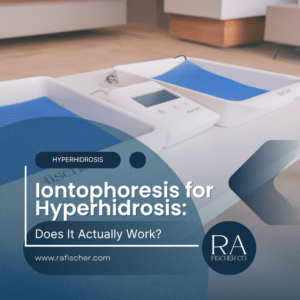
Botox injections and iontophoresis both reduce excessive sweating, and both work. The difference is what you are signing up for. Botox is a course of injections given in a clinic, repeated every few months, at a cost each time. Iontophoresis is a device you use at home, bought once, and covered by most major US insurance plans. For many patients the decision comes down to whether they would rather return to a clinic two or three times a year or spend fifteen minutes at home a few times a week.
Botox works. This is not an argument that it does not
Botulinum toxin blocks the nerve signals that activate sweat glands, and it is effective. It is FDA-approved for severe primary underarm hyperhidrosis, and dermatologists use it widely for palms and soles as well, which is off-label but established practice.
Published treatment algorithms generally place iontophoresis earlier in the sequence and Botox at the moderate-to-severe end, sometimes using both. So the honest question is not which one works, but which fits your situation, your budget and how much clinic time you want.
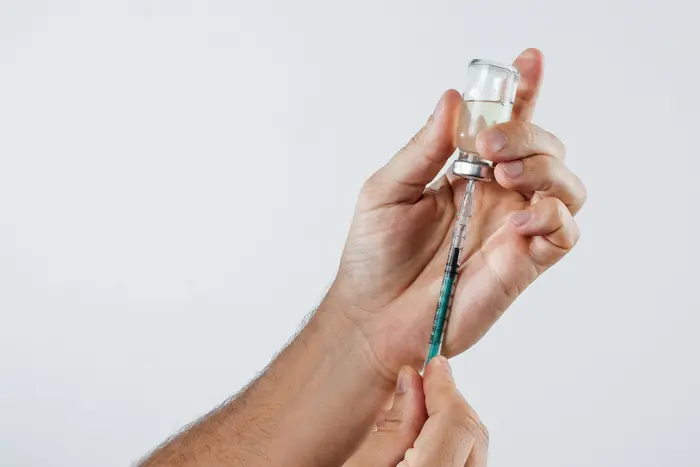
Botox for hyperhidrosis is administered in a clinic and repeated every few months.
Botox and iontophoresis at a glance
| Botox injections | The Fischer (iontophoresis) | |
|---|---|---|
| How it works | Botulinum toxin blocks the nerve signals to the sweat glands | A gentle current carries tap water minerals into the sweat ducts |
| Where it happens | In a clinic, performed by a clinician | At home, on your own schedule |
| How often | Repeated every 4 to 6 months, sometimes longer for underarms | Every other day at first, then maintenance every 3 to 6 weeks |
| Areas treated | Underarms (FDA-approved), palms and soles (off-label) | Hands, feet and underarms |
| What it involves | Multiple injections per area, with numbing | Hands or feet in water trays, a mild tingling |
| Common side effects | Injection site pain and bruising; temporary hand weakness after palm injections | Tingling, dryness, occasional redness at the water line |
| Cost pattern | Recurring, each time | One-time purchase, no consumables |
| Insurance | Often covered for underarms after other treatments fail; palms and soles harder | Covered by most major US plans as durable medical equipment |
Where Botox is the better choice
If you will not keep up a home routine, Botox is better than a device you do not use. A few appointments a year suits some people far better than a schedule they have to maintain themselves, and that is a legitimate reason to choose it.
It is also the stronger option for severe underarm sweating that has not responded to other treatments, which is exactly the situation it is approved for. And if your insurance covers Botox for underarms but you are not eligible for device coverage, the economics may favour it.
Where iontophoresis is the better choice
- Sweaty hands and feet. Botox on the palms involves many injections into an area dense with nerve endings, and temporary hand weakness is a documented side effect. Iontophoresis treats hands and feet together with nothing injected.
- Cost over years, not months. Botox recurs for as long as you want results. The Fischer is bought once.
- No needles and no clinic visits. Treatment happens at home in 15 to 20 minutes.
- Nothing enters the body. Ordinary tap water and a low current, with no medication involved.
- Insurance. Most major US plans cover The Fischer as durable medical equipment for hyperhidrosis, and we handle prior authorization and claims.
The cost over time
This is where the two separate most clearly. Botox for hyperhidrosis commonly runs $1,000 to $1,500 per treatment, repeated every four to six months. At two to three treatments a year, that is a recurring annual cost for as long as you want to stay dry.
The Fischer is a one-time purchase under $900 with no consumables, no replacement electrodes and no refills. Even paying entirely out of pocket, it usually costs less than a single year of injections. For insured US patients, plans including Tricare, Aetna, Cigna, United Healthcare, Horizon BCBS and Select Health commonly cover it, and many patients pay nothing.
Insurance for Botox is more conditional. Underarm treatment is often covered once topical treatments have failed, while palms and soles, being off-label, are considerably harder to get approved.
Frequently asked questions
Is Botox or iontophoresis better for sweaty hands?
Both are used for palms, but they differ considerably in practice. Botox on the hands means many injections into an area dense with nerve endings, and temporary hand weakness is a documented side effect. Iontophoresis treats hands and feet together, at home, with nothing injected. Botox for palms is also off-label, which makes insurance coverage harder.
How often does Botox for hyperhidrosis need repeating?
Typically every four to six months, though underarm results sometimes last longer. The effect wears off as nerve function returns, so treatment continues indefinitely if you want to maintain the result.
Can I use both?
Some patients do, and published treatment algorithms combine them for more severe cases. If you are already having Botox and considering a device as well, it is worth discussing with the clinician treating you.
Does insurance cover Botox for sweating?
Often for underarms, once topical treatments have been tried without success, since that is the approved use. Palms and soles are treated off-label, so coverage is harder to obtain. The Fischer is covered by most major US plans as durable medical equipment, and we handle the prior authorization.
How quickly does each one work?
Botox usually takes effect within a few days to two weeks of injection. Iontophoresis builds over one to two weeks of regular sessions, and some people need five to ten sessions before the effect shows. Neither is instant.
Still deciding?
Our Treatment Specialists talk people through this comparison every day, including people who stay with Botox. There is no obligation, and we can tell you what your insurance covers before anything is ordered. Call (800) 525-3467 or send us a message.
Read next: how The Fischer works, or compare it with miraDry, Dermadry and Hidrex.