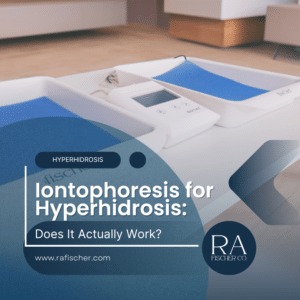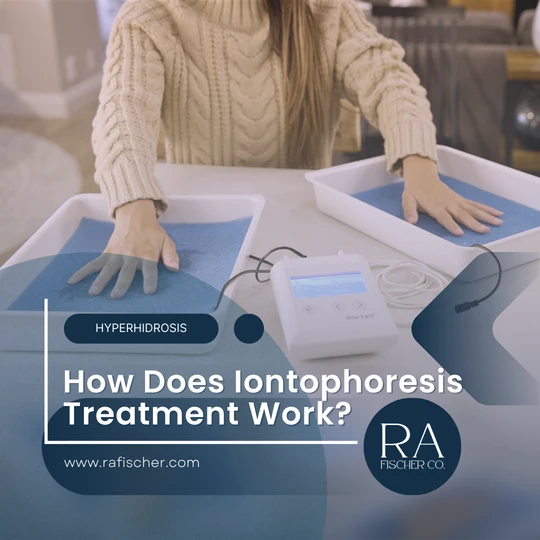
Iontophoresis passes a gentle electrical current through tap water to carry its naturally occurring minerals into the sweat pores, where they temporarily block the ducts and reduce sweating. No drugs, no injections, no surgery, and nothing absorbed into the body. It is done at home in sessions of 15 to 20 minutes, and most patients see a clear difference within one to two weeks.
What happens during a session
- Tap water goes into the trays. Ordinary water from the tap, because the minerals already in it (calcium, magnesium and others) are what carry the current.
- Hands, feet or the underarm electrodes make contact. The circuit completes and the device begins its countdown.
- A low current passes through the water. Most people feel a mild tingling. It should never be painful, and the intensity is adjustable throughout.
- Mineral ions move into the sweat ducts, where they form a temporary plug that reduces how much sweat reaches the surface.
- The session ends after 15 to 20 minutes. There is no recovery time and nothing to apply afterwards.
The effect builds with repetition rather than arriving all at once, which is why the first few weeks are the intensive phase. The getting started guide sets out the schedule week by week.
Why tap water, and not a solution
The treatment depends on minerals that are already present in ordinary tap water. Nothing needs to be added, and no medication is involved at any point.
Water that is very low in minerals, which includes softened and distilled water, carries current poorly. If you are struggling to reach a useful current level, a teaspoon of baking soda dissolved in each tray usually resolves it.
What it treats
Iontophoresis is used for focal hyperhidrosis, meaning excessive sweating concentrated in particular areas rather than across the whole body. The Fischer is FDA-cleared for all three focal areas:
- Palmar hyperhidrosis, sweaty hands. The most commonly treated area.
- Plantar hyperhidrosis, sweaty feet. Can be treated in the same session as the hands.
- Axillary hyperhidrosis, underarm sweating, using the dedicated underarm electrodes.
The technique is not new. Iontophoresis has been used since the eighteenth century to move substances across the skin, and has been an established hyperhidrosis treatment for decades. More about hyperhidrosis and the treatment options.
How long results last
Treatment reduces sweating rather than curing it, so sessions continue at a lower frequency once dryness is reached. Most patients treat every other day for about three weeks, stretch to every three days for two weeks, then settle into maintenance every three to six weeks.
If sweating starts to return, going back to a shorter interval for a week or two usually restores it. Nothing is lost by pausing and restarting.
Is it safe?
For most people, yes. The current is low and nothing enters the bloodstream. The common side effects are mild: tingling during treatment, some skin dryness, and occasionally redness or small blisters where the current is strongest. These usually settle as treatment continues, and lowering the current or repositioning the electrodes generally helps.
It is not suitable for everyone. Iontophoresis should not be used by people with a pacemaker or other implanted device, during pregnancy, or where there is metal hardware in the treatment area, among other contraindications. The full list is on the technical support page, and anyone unsure should speak to their doctor first.
Cover small cuts or broken skin with petroleum jelly before treating, which insulates them from the current.
How The Fischer does it
Every iontophoresis device works on the same principle, so the differences are in the engineering:
- Direct and pulsed current. Direct current is the more effective of the two; pulsed is gentler for sensitive skin. Most devices offer only one.
- Metal-free silicon-graphite electrodes. No corrosion, no metal burns, and no replacement cost over the life of the device.
- Hands and feet in one session. Trays large enough to treat all four areas at once, rather than two separate sessions.
- Adjustable from 1 to 30 mA, so you can start gently and build up.
The Fischer reports a 98% success rate in reducing sweating for patients who complete the treatment protocol. It is covered by most major US insurance plans, and RA Fischer handles the prior authorization.
Frequently asked questions
How does iontophoresis work?
A gentle electrical current passes through tap water and carries the minerals already in that water into the sweat ducts, where they form a temporary plug that reduces sweating. No medication is involved and nothing is absorbed into the body.
How long does an iontophoresis session take?
Fifteen to twenty minutes, no more than once a day. In the first three weeks most patients treat every other day, then taper to every three days, and eventually to maintenance sessions every three to six weeks.
Does iontophoresis hurt?
No. Most people describe a mild tingling, similar to pins and needles. It should never be painful, and the intensity is adjustable at any point during the session. If it feels uncomfortable, turn the current down.
How soon will I see results?
Most patients notice a meaningful reduction within one to two weeks of consistent treatment. Some need five to ten sessions before anything changes, so it is worth persisting before adjusting the protocol.
Can iontophoresis treat underarm sweating?
Yes. The Fischer includes dedicated underarm electrodes for axillary hyperhidrosis. Underarms are treated as a separate session from hands and feet.
Who should not use iontophoresis?
It is not recommended during pregnancy, for children under six, or for anyone with a pacemaker, an implanted cardiac device, epilepsy, a cardiac condition, or metal hardware in the treatment area. The full list of contraindications is on our technical support page. If you are unsure, ask your doctor.
Questions about your own situation?
Our Treatment Specialists answer these every day and can check what your insurance covers before anything is ordered. Call (800) 525-3467 or send us a message.
Read next: do I have hyperhidrosis, or am I just sweaty? and what type of doctor treats hyperhidrosis?