What Is Hyperhidrosis? The Complete Guide for Patients
Sweating is how the body keeps you cool. The thermoregulation system kicks in during exercise, heat exposure, and stress to prevent overheating. But for a significant portion of the population, sweat glands fire constantly, excessively, and without any logical trigger, sitting in an air-conditioned office, watching television, sleeping. That is hyperhidrosis, and if you are reading this because your hands are slipping on your phone screen right now, you already know it is more than a minor annoyance. This is a real medical condition with real treatments, and understanding it fully is the first step toward getting your life back.
What Hyperhidrosis Actually Is
Hyperhidrosis is a condition where the eccrine sweat glands produce far more sweat than the body needs for temperature regulation. These glands cluster most densely in four areas: the palms, soles of the feet, underarms, and face and scalp. In someone with hyperhidrosis, these glands produce sweat in amounts that are disproportionate to any physical or environmental demand.
Primary vs. Secondary: Why the Distinction Matters
Primary Focal Hyperhidrosis
The majority of cases are primary, meaning the excessive sweating is the condition itself rather than a symptom of something else. Key characteristics:
- Strong genetic component, tends to run in families
- Affects specific, symmetric body zones rather than the whole body
- Occurs frequently during waking hours but typically does not happen during sleep
- Onset is typically in childhood or adolescence
Secondary Generalized Hyperhidrosis
Secondary hyperhidrosis is sweating caused by another medical condition or medication. The treatment approach is completely different, as you treat the underlying cause rather than just the sweating. Common secondary causes include thyroid disorders, diabetes, menopause, infections, and medications such as SSRIs and certain blood pressure drugs. Red flags: sweating that started suddenly in adulthood, generalized sweating across the whole body, and night sweats accompanied by weight loss or fever. If any of these apply, see your doctor before pursuing focal treatments.
Types by Location
Palmar Hyperhidrosis (Hands)
The most functionally disruptive form. Patients report difficulty gripping objects, damaged electronics, and intense anxiety around handshakes. It is also the type most commonly treated with iontophoresis. For a detailed guide to this specific type, see our post on what is palmar hyperhidrosis.
Plantar Hyperhidrosis (Feet)
Often occurs alongside palmar sweating. Beyond discomfort, plantar hyperhidrosis creates real medical risks including fungal infections, bacterial overgrowth, and increased fall risk from slipping inside shoes.
Axillary Hyperhidrosis (Underarms)
The most visible form. Sweat stains through clothing, persistent odor despite hygiene, and the constant need to change shirts. This type often responds well to clinical-strength antiperspirants.
What Causes It
The eccrine glands themselves are structurally normal in people with primary hyperhidrosis. The problem is in the signaling: the body sends sweat signals at a volume and frequency that is out of proportion to any actual temperature demand. Primary hyperhidrosis has a genetic component and tends to run in families. Stress and anxiety do not cause hyperhidrosis, but they can amplify it. The same goes for caffeine, warm environments, and physical exertion.
The Real-World Impact
The clinical description does not capture what living with this condition actually feels like. Common impacts include:
- Professional consequences: Avoiding careers or opportunities that involve physical contact, public speaking, or handling shared equipment
- Social withdrawal: Skipping social events, avoiding dating, refusing handshakes
- Mental health burden: Rates of anxiety and social avoidance are significantly higher in the hyperhidrosis population
- Daily logistics: Carrying extra clothing, avoiding certain fabrics and colors, the constant mental load of managing around the condition
Treatment Options
Antiperspirants (First Line)
Clinical-strength aluminum chloride formulations are the standard starting point, particularly for underarm sweating. For palms and soles, effectiveness drops significantly because the skin is thicker and absorption is poor. See our comparison of an
iontophoresis machine vs. prescription antiperspirant for a detailed breakdown.
Iontophoresis: The Standard for Hands and Feet
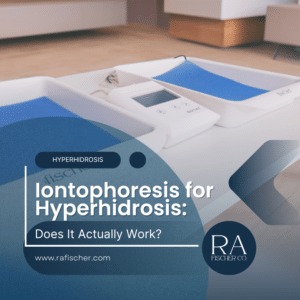
This is where most patients with palmar or plantar hyperhidrosis find real relief. Iontophoresis works by passing a low-level electrical current through water while the treatment area is submerged. The current drives naturally occurring minerals into the sweat gland ducts, temporarily reducing sweat output.
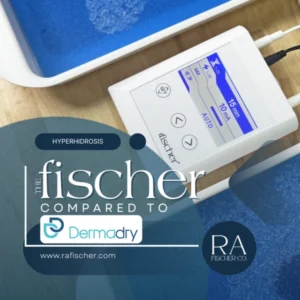
Initial treatment requires 15-minute sessions daily or every other day for two to four weeks. Once sweating is controlled, most patients maintain results with one to three sessions per week. The Fischer by RA Fischer Co. is an FDA-cleared home iontophoresis device that achieves a 98% success rate. It offers adjustable current from 1 to 30 mA, both Direct and Pulsed Current modes, and metal-free silicon-graphite electrodes. RA Fischer Co. has been supporting hyperhidrosis patients since 1948.
Botox® Injections
Botulinum toxin injections block the nerve signals that trigger sweating. FDA-cleared for axillary hyperhidrosis, with off-label use for palms and feet. Injections into the palms can be intensely painful even with nerve blocks, and temporary hand weakness may occur after palmar treatment. Results last 6 to 9 months per treatment cycle.
Oral Medications
Anticholinergics like glycopyrrolate and oxybutynin reduce sweating systemically. They work, but the side effects are significant including dry mouth, blurred vision, constipation, and urinary retention. These medications are typically reserved for patients who have not responded to focal treatments.
ETS Surgery
Endoscopic thoracic sympathectomy permanently cuts or clamps the sympathetic nerves that trigger sweating. RA Fischer Co. does not recommend ETS as a treatment option given the serious risks, most notably compensatory sweating where the body redirects sweat production to the trunk, back, or legs, which many patients find worse than the original condition. For a full discussion, see our post on The Fischer vs. ETS Surgery.
Insurance Coverage
Many insurance plans cover The Fischer as medically necessary durable medical equipment when prescribed by a physician. RA Fischer Co. handles the insurance paperwork on your behalf. Contact us to check your coverage at no obligation.
Frequently Asked Questions
Is hyperhidrosis curable?
Primary hyperhidrosis has no permanent cure. Iontophoresis and other treatments effectively suppress sweating but require ongoing maintenance to sustain results.
Can hyperhidrosis develop later in life?
Primary hyperhidrosis typically begins in childhood or adolescence. New-onset excessive sweating in adulthood more commonly suggests a secondary cause and warrants medical evaluation.
What is the best treatment for sweaty hands and feet?
For focal sweating of the palms and soles, The Fischer is the most effective option available for at-home use, achieving a 98% success rate.
Will my children inherit hyperhidrosis?
There is a significant genetic component to primary hyperhidrosis. If you have the condition, your children have a higher chance of developing it than the general population.
If excessive sweating is shaping your decisions about what to wear, who to touch, and which opportunities to pursue, you are dealing with a treatable medical condition. Learn more about The Fischer or contact us to verify your insurance coverage and get started.
Legal Disclaimer: Botox® is a registered trademark of Allergan, Inc. This article is not affiliated with or endorsed by Allergan, Inc. This information is based on publicly available information and is intended to inform individuals about their hyperhidrosis treatment options. RA Fischer Co. provides this information to help patients make informed decisions about managing their condition. The Fischer is a product of RA Fischer Co.