
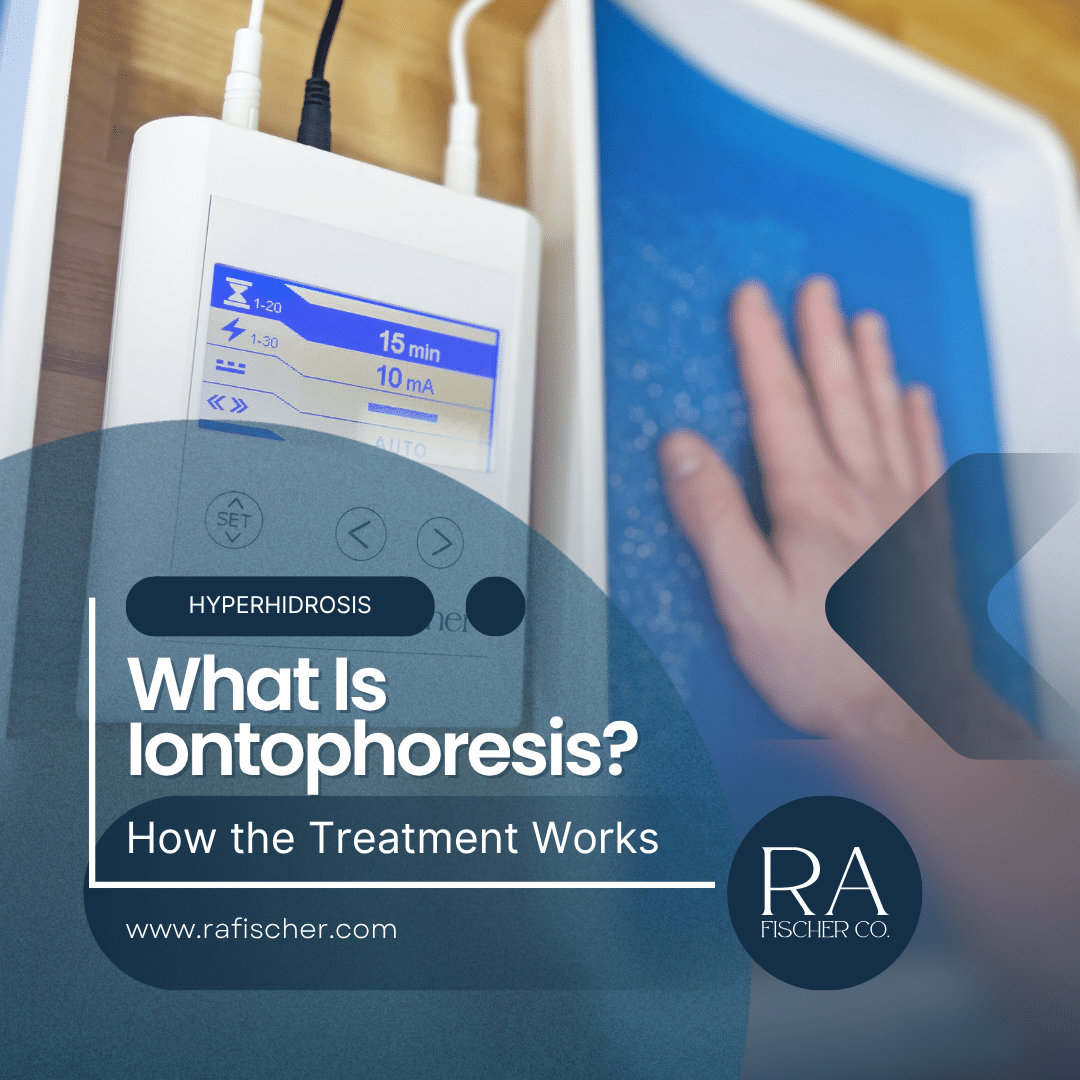
What Is Iontophoresis? How the Treatment Works
If you’ve ever dealt with excessively sweaty palms, feet, or underarms and felt like antiperspirants were a joke, you’ve probably gone down the rabbit hole of treatment options. Somewhere in that search, you likely came across iontophoresis: a treatment that sounds more complicated than it actually is. The basic idea is simple. Water and a mild electrical current work together to reduce sweat production. Iontophoresis has been around since the 1940s, and it’s one of the most well-studied treatments for excessive sweating, yet most people have never heard of it.
That’s partly because it doesn’t involve a prescription pill or a flashy procedure, so it doesn’t get the same marketing push. But for the millions of people living with hyperhidrosis, understanding how iontophoresis treatment works can be genuinely life-changing. The treatment has a strong track record, a relatively low risk profile, and can be done at home.
What Is Iontophoresis?
Iontophoresis is a non-invasive medical treatment that uses a low-level electrical current delivered through water to temporarily reduce sweat gland activity. The affected body part, typically the hands or feet, is submerged in shallow trays of tap water while a device sends a gentle current through the water. For underarm treatment, wet pads are used instead of trays.
The technique has been used in clinical dermatology for decades and is FDA-cleared for treating hyperhidrosis. It doesn’t involve needles, surgery, or systemic medication, which makes it appealing to people who want a targeted, localized approach to their sweating problem.
How Iontophoresis Works
The exact mechanism isn’t fully understood, but the leading theory is that the electrical current disrupts the signaling between nerves and sweat glands, temporarily blocking the ion channels that trigger perspiration. Some researchers believe the mineral content in tap water interacts with the current to create a superficial plug in the sweat ducts. Either way, the result is the same: sweat production in the treated area drops significantly.
The current used is very mild. Most patients find that treating between 10 and 15 mA is comfortable and effective, though The Fischer is adjustable from 1 all the way up to 30 mA to suit individual tolerance and treatment needs. Most people feel only a light tingling during treatment.
What It Treats (and What It Doesn’t)
Iontophoresis is specifically effective for focal hyperhidrosis, which is excessive sweating concentrated in certain body areas. Hands and feet respond quickest, with most patients reaching complete dryness within the first two to three weeks of treatment. Underarm sweating can also be treated and sometimes takes a little longer — typically closer to the three to four week mark. Overall, The Fischer has a 98% success rate.
What iontophoresis won’t help with is generalized sweating across the entire body or sweating caused by an underlying medical condition like thyroid disease, infection, or medication side effects. If your sweating is widespread rather than concentrated in specific zones, your doctor will likely want to investigate other causes first.
Who Iontophoresis Is For
This treatment is primarily aimed at people diagnosed with primary focal hyperhidrosis, a condition affecting roughly 3–5% of the population. These are people whose sweating goes well beyond what’s normal, often to the point where it interferes with daily activities like gripping a pen, shaking hands, or wearing open shoes. Most people who try iontophoresis have already gone through clinical-strength antiperspirants without adequate relief.
Managing Hyperhidrosis: Sweaty Hands, Feet, and Underarms
The most common candidates are people with palmar hyperhidrosis (sweaty hands) and plantar hyperhidrosis (sweaty feet). These two areas respond remarkably well because they’re easy to submerge in water trays, allowing consistent current delivery across the skin’s surface.
Underarm treatment requires a slightly different setup with wet electrode pads, but it’s effective for most patients. People who’ve tried prescription antiperspirants containing aluminum chloride and found them irritating or insufficient often find iontophoresis to be a practical next step.
Who Should Avoid Iontophoresis
Not everyone is a candidate. The following conditions are contraindications for iontophoresis treatment:
- Cardiac pacemakers or implanted cardioverter defibrillators (ICDs)
- Palpitations or cardiac arrhythmia
- Pregnancy
- Metal implants in the current path — including metal IUDs for patients treating the feet
- Neurological conditions such as epilepsy
- Pathologically altered skin or large skin defects in the treatment area
- Malignant disorders in the treatment area
- Severe local inflammation or thrombosis
- Severe vascular disorders
If any of these apply, consult your physician before using an iontophoresis device.
What to Expect During a Treatment Session
If you’ve never done iontophoresis before, the process is straightforward. There’s no special preparation needed beyond removing jewelry from the treatment area and making sure your skin is free of lotions or creams.
Equipment and Setup
The Fischer by RA Fischer Co. is an FDA-cleared home iontophoresis device available in three bundle options depending on which areas you’re treating: Hands & Feet, Underarms, and 3-in-1. Each configuration includes the relevant trays or electrode pads for those treatment areas. A key part of the setup is placing pH-balancing foam inserts between the electrodes and the treatment area — these are provided with The Fischer and should always be used. Many other iontophoresis devices use towels or washcloths for this purpose; The Fischer’s foam inserts are a meaningful design improvement for consistency and comfort.
What Happens During the Session
Turn on The Fischer and set your treatment parameters before placing your hands or feet in the trays or applying the underarm electrodes. Once the device is configured, place the treatment area in position and gradually increase to your target current level. Most patients treat at 10–15 mA. The sensation is a mild tingling or prickling — not painful but noticeable. A typical session lasts 15 minutes.
The Fischer offers both automatic current reversal and manual direction change, giving you flexibility depending on your treatment preference. The AUTO setting handles polarity reversal automatically, which is what most patients use.
How Many Sessions Does It Take?
The initial treatment phase usually requires sessions every day or every other day for two to four weeks. Most people start noticing reduced sweating within 6 to 10 sessions. Once you reach a satisfactory level of dryness, you shift to a maintenance schedule, typically one to three sessions per week. The exact frequency varies from person to person, and it may take a few weeks of adjusting to find the rhythm that works best for you.
Does Iontophoresis Actually Work?
For most people with focal hyperhidrosis, yes. The evidence is solid and the results speak for themselves.
What the Research Says
Clinical studies consistently show success rates between 80% and 90% for iontophoresis as a general treatment modality for palmar and plantar hyperhidrosis. Iontophoresis is recognized as a well-established, effective first-line treatment for excessive hand and foot sweating by dermatological guidelines.
The Fischer goes further. With adjustable 1–30 mA settings, both Direct Current and Pulsed Current modes, and metal-free silicon-graphite electrodes for safer and more consistent treatment, The Fischer achieves a 98% success rate. That’s not a general iontophoresis claim — it’s specific to this device.
How Long Results Last
Results aren’t permanent. Once you stop treatment, sweating gradually returns, usually within one to four weeks. That’s why maintenance sessions are essential. Most people find a rhythm that fits their schedule without much disruption. Think of it like exercise: the benefits last as long as you keep showing up.
Side Effects and Safety
Iontophoresis has one of the best safety profiles of any hyperhidrosis treatment. Serious complications are extremely rare when the device is set up and used correctly.
Common Skin Reactions
The most frequent side effects are mild and temporary. Skin dryness, redness, and slight irritation at the treatment site are common during the first few sessions. Applying a moisturizer after treatment typically resolves dryness. Petroleum jelly applied to any small cuts or abrasions before treatment can prevent stinging in those spots.
Always use the foam inserts provided with The Fischer between the electrodes and the treatment area. Direct contact with the electrodes should be avoided.
Contraindications
See the full contraindications list in the “Who Should Avoid Iontophoresis” section above. When the device is set up correctly and contraindications are observed, the risk of serious adverse events is extremely low.
At-Home vs. In-Clinic Iontophoresis
You can receive iontophoresis treatments at a dermatologist’s office or physical therapy clinic, but many people transition to home use. Both approaches use the same principle.
Benefits of Treating at Home
Home treatment eliminates the need for repeated clinic visits, which saves time and money over the long term. Since the treatment requires consistency, doing it at home is simply more practical. You can treat while watching TV or catching up on emails.
Many insurance plans cover The Fischer as durable medical equipment (DME) when prescribed by a physician. RA Fischer Co. handles the insurance paperwork on your behalf — including the letter of medical necessity that your prescriber signs off on — so you don’t have to navigate the process alone. Contact us to check your coverage.
What to Look for in a Home Device
Not all iontophoresis devices are created equal. Look for one that’s FDA-cleared, offers adjustable current settings, and includes both hand/foot trays and underarm pads. Plug-in models tend to deliver more consistent current than battery-powered alternatives.
The Fischer stands out on every point that matters: FDA-cleared, metal-free silicon-graphite electrodes for safer treatment, customizable 1–30 mA settings rather than limited presets, both Direct and Pulsed Current modes for treatment flexibility, and insurance coverage handled for you by the RA Fischer team. Backed by a company that has been supporting hyperhidrosis patients since 1948. Learn more about The Fischer or contact us with questions.
Is Iontophoresis Right for You?
If you’re dealing with excessive sweating on your hands, feet, or underarms and topical antiperspirants haven’t given you adequate relief, iontophoresis deserves serious consideration. It’s backed by decades of clinical research, carries minimal risk, and can be done in the comfort of your own home. RA Fischer Co. has been helping patients treat hyperhidrosis at home since 1948. Contact us to learn more about The Fischer and whether it’s right for you.