Iontophoresis Machine vs. Prescription Antiperspirant: What’s the Difference?
If you’ve been managing excessive sweating, there’s a good chance you’ve already tried prescription antiperspirants. They’re usually the first clinical recommendation, and for mild cases of excessive sweating they work well enough. But for people with hyperhidrosis — where sweating is chronic, heavy, and disruptive regardless of the season or your stress level — prescription antiperspirants often fall short.
That’s where an iontophoresis machine enters the picture. These two treatments work through completely different mechanisms, carry different risks, and suit different patients. Here’s what you need to know before deciding which direction to go.
What Is a Prescription Antiperspirant?
Prescription antiperspirants contain aluminum chloride hexahydrate at higher concentrations than anything available over the counter. Drysol, for example, contains 20% aluminum chloride hexahydrate, while Xerac AC contains 6.25%. The aluminum chloride works by forming a temporary plug in the sweat duct, physically blocking sweat from reaching the skin’s surface.
They’re applied at night to completely dry skin, usually with an occlusive wrap to improve absorption, and rinsed off in the morning. For many patients, weekly or biweekly applications are enough to maintain results once the initial treatment period is complete. That accessibility is a real advantage for people just starting to address their sweating.
Why Prescription Antiperspirants Stop Working for Some People
The main limitations show up in specific patient groups. For people with palmar or plantar hyperhidrosis – sweaty hands and feet – prescription antiperspirants are notoriously difficult to use. The skin on the palms and soles is thick, reducing absorption, and the occlusive wrap required is impractical for most people overnight.
Skin irritation, chemical burns, and contact dermatitis are also common, particularly at higher concentrations. Some people can push through the discomfort during the initial loading phase, but others simply can’t tolerate it.
And for some patients, the plugging effect simply doesn’t produce strong enough results regardless of the concentration used. This is especially true for people with severe focal hyperhidrosis, where sweat output overwhelms the chemical barrier within hours. There’s also the compliance issue — applying a topical treatment to perfectly dry skin every night on areas that sweat heavily is a frustrating cycle that feels unsustainable after several months.
What Is an Iontophoresis Machine?
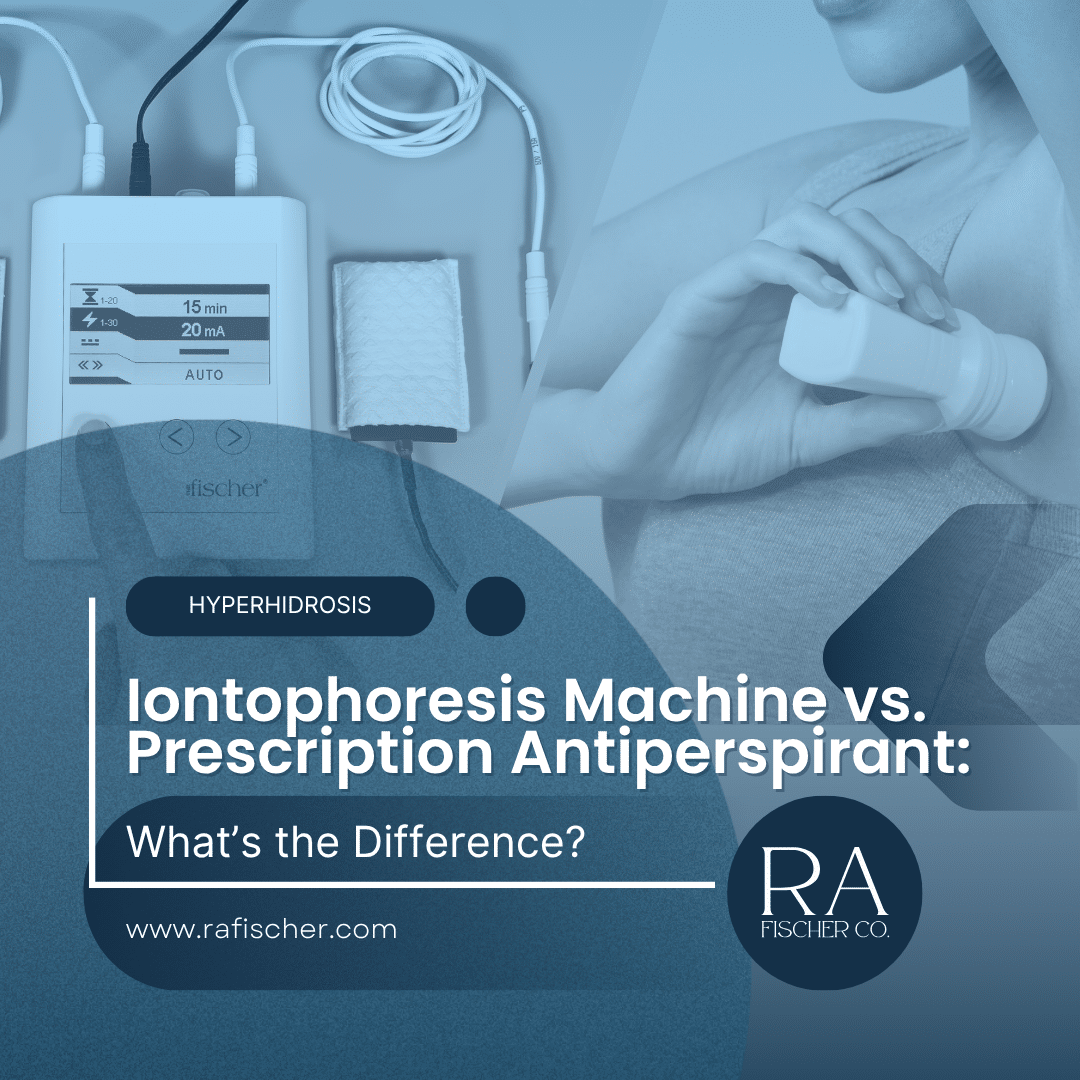
An iontophoresis machine is a medical device that uses a low-level electrical current, delivered through water, to reduce sweat gland activity. The hands or feet are placed in shallow trays of tap water — the trays hold the electrodes and foam pads, through which the current passes into the skin. For underarm treatment, wet electrode pads replace the trays.
The mechanism is different from antiperspirants. The exact reason iontophoresis works isn’t fully understood, but the leading theory is that the current pushes minerals found in tap water into the pores, creating a blocking effect similar to what aluminum chloride does chemically. Rather than applying a chemical compound to the surface, iontophoresis works from within the duct. The result is a reduction in sweat production that builds over multiple sessions and is maintained through regular use.
Clinical success rates for iontophoresis as a general treatment modality are encouraging, with published research showing significant sweat reduction in approximately 80% to 90% of patients with palmar and plantar hyperhidrosis after around 10 sessions.
The Fischer goes further. With adjustable 1–30 mA settings, both Direct Current and Pulsed Current modes, and metal-free silicon-graphite electrodes, The Fischer achieves a 98% success rate — specific to this device, not a general iontophoresis claim.
Iontophoresis devices are FDA-cleared for treating hyperhidrosis and have been used clinically since the mid-20th century. They’re available for in-clinic use at dermatology offices and for home use through medical device suppliers.
Iontophoresis vs. Prescription Antiperspirant: Side-by-Side
| Prescription Antiperspirant | Iontophoresis Machine (The Fischer) | |
| How it works | Aluminum chloride plugs sweat ducts chemically | Low-level electrical current pushes minerals into pores, reducing sweat gland output |
| Best for | Underarms, mild to moderate sweating | Hands, feet, underarms — all severity levels |
| Application | Topical, applied at night | Device sessions, 15–20 minutes |
| Initial treatment phase | Daily application for 1–2 weeks | Daily or every-other-day sessions for 2–4 weeks |
| Side effects | Skin irritation, burning, contact dermatitis | Temporary skin dryness, minor redness |
| Clinical success rate | 60–80% (general research, varies by severity and area) | 98% for The Fischer | 80–90% general iontophoresis |
| Insurance | Usually covered as prescription | Can be covered by insurance — check your plan |
| At-home use | Yes | Yes — home devices available |
| Ongoing maintenance | Weekly or biweekly applications | 1–3 sessions per week once stabilized |
Who Should Consider an Iontophoresis Machine?
Iontophoresis is typically the recommended next step after prescription antiperspirants have failed or caused significant irritation. It’s particularly well-suited for patients with palmar or plantar hyperhidrosis, where antiperspirants are difficult to apply effectively and the skin’s thickness limits absorption.
Iontophoresis is also a strong option for patients who want to avoid systemic medications like oral glycopyrrolate, which can cause dry mouth, blurred vision, constipation, and urinary retention as side effects. Iontophoresis works locally — there’s no systemic absorption and no systemic side effects. That distinction matters a lot for people who need long-term treatment, which is most hyperhidrosis patients.
People who’ve been told their next option is Botox® injections should also know about iontophoresis. Botox® for hyperhidrosis works well but requires repeat injections every 6 to 9 months and can be quite painful in the hands and feet. An iontophoresis device is a one-time purchase that you control at home on your own schedule.
What to Expect During Treatment
The initial phase requires commitment: daily or every-other-day sessions of 15 to 20 minutes for roughly two to four weeks. Most patients notice a meaningful reduction in sweating within the first 10 sessions. Once you reach your desired dryness level, you shift to maintenance — typically one to three sessions per week.
During treatment, most people feel a tingling sensation — that’s a normal part of how the device works, not a side effect. Some patients experience temporary skin dryness or minor redness after sessions that resolves within an hour. Serious adverse events are rare when the device is used correctly.
Contraindications for iontophoresis include: cardiac pacemakers or implanted cardioverter defibrillators (ICDs), palpitations or cardiac arrhythmia, pregnancy, metal implants in the current path (including metal IUDs for patients treating feet), neurological conditions such as epilepsy, pathologically altered skin or large skin defects in the treatment area, malignant disorders in the treatment area, severe local inflammation or thrombosis, and severe vascular disorders.
Is an Iontophoresis Machine Right for You?
If prescription antiperspirants haven’t given you adequate control over your sweating, particularly on your hands or feet, an iontophoresis device is worth serious consideration. The clinical evidence is strong, the results are practical, and treating at home makes it sustainable for the long term. The Fischer is an FDA-cleared iontophoresis machine designed specifically for home use, with adjustable 1–30 mA settings, both Direct and Pulsed Current modes, metal-free silicon-graphite electrodes, and insurance coverage handled for you by the RA Fischer team. RA Fischer Co. has been supporting hyperhidrosis patients since 1948. Learn more about The Fischer or contact us with questions.
Legal Disclaimer: Botox® is a registered trademark of Allergan, Inc. This article is not affiliated with or endorsed by Allergan, Inc. This comparison is based on publicly available information and is intended to inform individuals about their hyperhidrosis treatment options. RA Fischer Co. provides this information to help patients make informed decisions about managing their condition. The Fischer is a product of RA Fischer Co.