
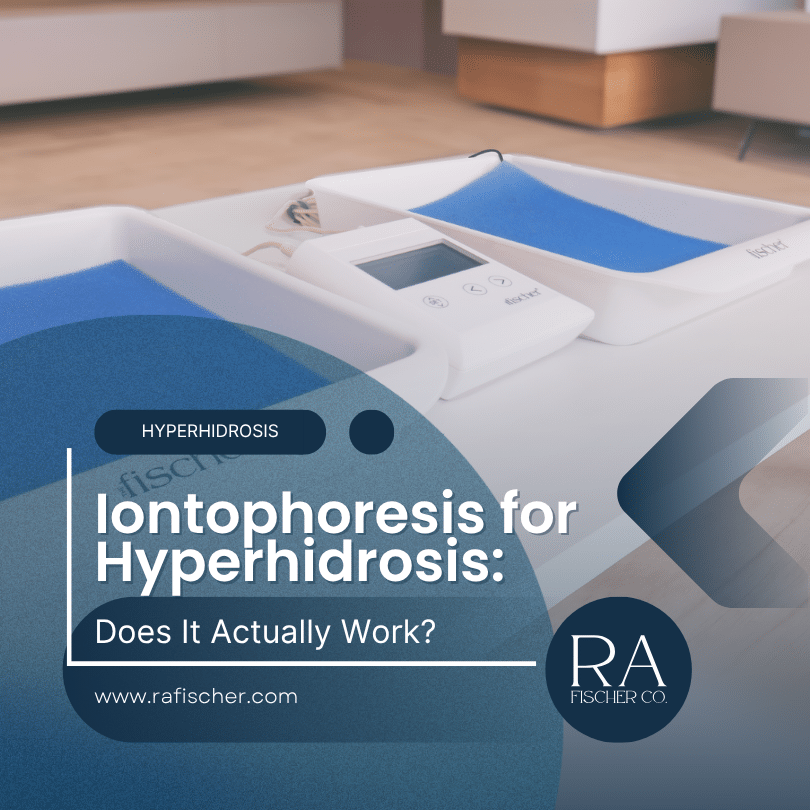
Iontophoresis for Hyperhidrosis: Does It Actually Work?
Quick Verdict
The Fischer by RA Fischer Co. achieves a 98% success rate. Clinical studies on iontophoresis as a general treatment modality consistently show high success rates for hands and feet when treatment is done consistently. It is not a cure, so you will need ongoing maintenance sessions, but most patients reach near-complete dryness within two to four weeks. If your hyperhidrosis is generalized, iontophoresis will not help. If it is focused on your hands, feet, or underarms, keep reading.
Does Iontophoresis Actually Work?
Yes, and the evidence is solid. Clinical data going back decades shows that iontophoresis treatment for excessive sweating consistently delivers results. Dermatological guidelines recognize it as a first-line treatment option after topical antiperspirants have failed. The Fischer specifically achieves a 98% success rate.
What Type of Sweating It Treats
Iontophoresis targets eccrine sweat glands in specific body areas: hands, feet, and underarms. This means it is designed for focal hyperhidrosis, the kind that affects specific zones rather than the whole body. If you are dealing with generalized hyperhidrosis or sweating caused by an underlying medical condition, iontophoresis is not the right fit.
How the Treatment Works
A low-level electrical current passes through tap water while the treatment area is submerged. The current drives naturally occurring minerals from the water into the outer layers of the skin, creating temporary blockages in the sweat gland ducts that reduce sweat output. The process is local and reversible. If treatment stops, the mineral plugs gradually dissolve and sweating returns. For underarm treatment, wet electrode pads are placed against the skin rather than submerging the area.
Direct Current vs. Pulsed Current
Most quality iontophoresis devices offer two current modes. Direct current delivers a steady continuous flow and is the recommended mode for all treatment areas. Pulsed current alternates on and off, which can reduce skin sensation and may be useful for patients who experience significant discomfort at higher settings. The Fischer offers both Direct and Pulsed Current modes with adjustable settings from 1 to 30 mA.
What Results Look Like: A Realistic Timeline
The Initial Phase
During the first two to four weeks, you will treat daily or every other day. Sessions last 15 minutes per treatment area. Most patients notice a measurable decrease in sweating within the first 6 to 10 sessions. Hands and feet usually respond first.
Reaching Dryness
By the end of week two or three, many patients report near-complete dryness for hands and feet. Underarms often take slightly longer, closer to three or four weeks. Skipping sessions during this phase delays results significantly.
Ongoing Maintenance
Once dryness is achieved, most patients sustain results with one to three sessions per week. Stop entirely, and sweating returns within a few weeks.
At-Home vs. In-Clinic Treatment
Clinic-based iontophoresis works, but the frequency required during the initial phase makes office visits impractical for most patients. A home device is more practical and cost-effective over the long term.
The real question is which at-home device. Generic units often have limited current settings, metal electrodes prone to corrosion and uneven current distribution, and minimal support. The Fischer, manufactured by RA Fischer Co. (in business since 1948), is FDA-cleared, features adjustable settings from 1 to 30 mA, both Direct and Pulsed Current modes, and metal-free silicon-graphite electrodes that deliver consistent current. The Fischer achieves a 98% success rate.
Insurance Coverage
Many insurance plans cover The Fischer as durable medical equipment when prescribed by a physician. RA Fischer Co. handles insurance paperwork on behalf of patients. Contact us to check your coverage at no obligation.
Who Should Avoid Iontophoresis
Iontophoresis is safe for most people, but there are contraindications. Do not use iontophoresis if you have a pacemaker or implanted cardiac defibrillator, are pregnant, have metal implants in the treatment area, or have epilepsy or certain neurological conditions. Open wounds or significant skin irritation in the treatment zone require waiting until the skin heals. See the full contraindications list in The Fischer product documentation.
Frequently Asked Questions
-
How long does iontophoresis take to start working?
Most patients see meaningful sweat reduction within 6 to 10 sessions, which translates to roughly two weeks of daily treatment. Hands and feet typically respond fastest. Underarms may take three to four weeks.
-
What if my results plateau or sweating comes back?
The most common fix is temporarily increasing session frequency. Contact RA Fischer for protocol guidance if results are not improving.
-
Does iontophoresis hurt?
Most patients describe a mild tingling sensation during treatment, which is a normal part of how the device works, not a side effect. If you experience discomfort, reduce the current intensity.
-
How long does each session take?
Sessions last 15 minutes. With The Fischer, you can treat both hands and both feet simultaneously, so you can complete a full hands-and-feet treatment in 15 to 20 minutes total.
-
Is iontophoresis safe for teenagers?
Primary hyperhidrosis often begins during adolescence, and iontophoresis is appropriate for teens with physician supervision.
-
Is The Fischer covered by insurance?
Often, yes. Many insurance plans cover The Fischer as medically necessary durable medical equipment when prescribed by a physician. Contact us to check your coverage.
If prescription antiperspirants have not given you adequate relief, iontophoresis is the logical next step. Learn more about The Fischer or contact us to check your insurance coverage.