MiraDry vs. Iontophoresis: Which Treatment Is Right for You?
MiraDry uses microwave energy to permanently destroy sweat glands in the underarms, while iontophoresis uses a gentle electrical current to temporarily reduce sweat gland activity in the hands, feet, and underarms. The biggest practical difference is where each one works: MiraDry treats your underarms only, while iontophoresis can treat sweaty hands and feet too. MiraDry is a procedure done in a clinic. Iontophoresis is something you do at home. If your sweating goes beyond your underarms, that difference is the whole decision.
Both treat hyperhidrosis, the medical term for excessive sweating, but they are not interchangeable. Here is how to tell which one fits.
Can MiraDry Treat Sweaty Hands and Feet?
No. MiraDry is cleared for the underarms only. It cannot treat the palms of your hands or the soles of your feet. This is one of the most common questions people have, and it is the single most important thing to know if your sweating is not limited to your underarms.
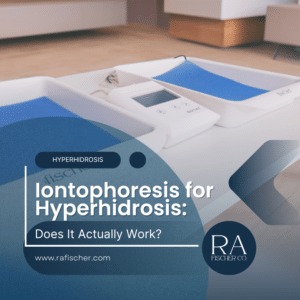
Iontophoresis works differently. Because it uses water trays and a gentle current rather than an in-office energy device, it is designed specifically for hands and feet, and it can be used on underarms as well. With The Fischer, you place your hands or feet in shallow trays of water, and the device passes a mild current through to calm overactive sweat glands. Many people treat both hands and feet in the same session.
So if you have palmar hyperhidrosis (sweaty hands), plantar hyperhidrosis (sweaty feet), or both, iontophoresis is the option built for you. MiraDry simply is not designed for those areas.
MiraDry vs. Iontophoresis at a Glance
| MiraDry | The Fischer (Iontophoresis) | |
|---|---|---|
| How it works | Microwave energy that heats and destroys underarm sweat glands | Gentle electrical current that temporarily reduces sweat gland activity |
| Areas treated | Underarms only | Hands, feet, and underarms |
| Where it happens | In-office, performed by a clinician | At home, on your own schedule |
| Invasiveness | Energy-based procedure with a recovery period | Non-invasive, no recovery time |
| Time per session | In-clinic appointment | About 15 minutes |
| Results | Marketed as a long-term reduction in underarm sweat | Consistent results maintained with ongoing sessions |
| Electrodes | Not applicable | Metal-free silicon-graphite (no metal burns) |
How MiraDry Works
MiraDry is an in-office procedure that uses microwave energy to heat and destroy the sweat glands in your underarms. Because those glands do not grow back, MiraDry is marketed as a long-term reduction in underarm sweating. It is performed by a clinician, usually with local numbing, and there is a short recovery period afterward with some swelling or tenderness. It only addresses the underarms.
How Iontophoresis Works
Iontophoresis treats excessive sweating by passing a gentle electrical current through water and into the skin, which temporarily reduces how much your sweat glands produce. The Fischer is an FDA-cleared iontophoresis device you use at home in sessions of about 15 minutes. It uses metal-free silicon-graphite electrodes, so there is no risk of the metal burns associated with older metal-electrode devices. There is no procedure and no recovery time. Because the effect is maintained rather than permanent, you keep up results with a regular treatment schedule, tapering to maintenance sessions once sweating is under control.
Which Treatment Is Right for You?
MiraDry may make sense if:
- Your excessive sweating is limited to your underarms
- You would rather have a procedure done in a clinic than treat yourself at home
- You are comfortable with an energy-based procedure and a short recovery
Iontophoresis (The Fischer) may make sense if:
- You sweat on your hands or feet, not just your underarms (MiraDry cannot treat these areas)
- You want a non-invasive treatment with no recovery time
- You prefer treating at home, on your own schedule, in about 15 minutes per session
- You want a metal-free option with no risk of metal burns
Looking for a MiraDry Alternative?
If you are researching alternatives to MiraDry, it usually comes down to two things: you want to treat an area MiraDry cannot reach, or you would rather avoid an in-office procedure altogether. Iontophoresis answers both. It is non-invasive, you do it at home, and it treats the hands and feet that MiraDry leaves out.
It also sits in a sensible middle ground among hyperhidrosis treatments. Prescription antiperspirants and Botox® injections are common starting points, and ETS surgery sits at the most invasive end. Iontophoresis is more durable than a topical and far less invasive than surgery or an energy-based procedure, which is why so many people land on it when weighing their options.
Frequently Asked Questions
Does MiraDry work on hands?
No. MiraDry is cleared for underarms only and cannot treat the palms. For sweaty hands, iontophoresis is the treatment designed for that area.
Can MiraDry be used on feet?
No. Like the hands, the feet are outside what MiraDry treats. Iontophoresis can treat both feet and hands, often in the same session.
Is iontophoresis a good MiraDry alternative?
For many people, yes. It is non-invasive, done at home, and treats hands and feet as well as underarms. It is the most common alternative for anyone who wants to avoid an in-office procedure or needs to treat an area MiraDry cannot.
How long do iontophoresis results last?
Iontophoresis reduces sweating for as long as you keep up treatment. Most people start with a series of sessions to get sweating under control, then move to occasional maintenance sessions to hold those results.
Is The Fischer covered by insurance?
The Fischer is covered by many major insurance plans. You can check your coverage or contact us and we will help you find out.
Find the Right Fit
If your sweating is limited to your underarms and you want a clinic procedure, MiraDry may be worth a look. If you want to treat sweaty hands or feet, prefer a non-invasive option, or want to treat at home, The Fischer is built for exactly that. Learn more about our iontophoresis machine and how to get started.