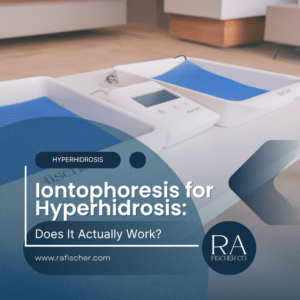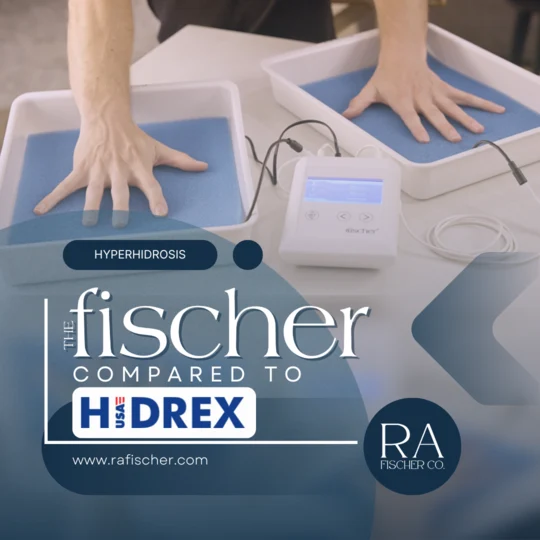
Hidrex and The Fischer are both FDA-cleared iontophoresis devices that treat sweaty hands, feet and underarms, and both offer direct and pulsed current. On the technical basics they are closely matched. The differences that affect patients are electrode material, whether hands and feet can be treated in one session, and, in the US, whether anyone handles your insurance.
Both devices are legitimate. Here is what actually differs
A 2024 research letter in the Journal of the American Academy of Dermatology surveyed the iontophoresis devices marketed for hyperhidrosis and tabulated their specifications. Both Hidrex and The Fischer appear as FDA-cleared, treating all three focal areas, and offering pulsed and direct current. Hidrex’s DVP1000 Ultimate is listed at a maximum of 35 mA against The Fischer’s 30 mA.
In other words, anyone telling you one of these devices does iontophoresis and the other does not is overselling. The honest comparison is about ownership rather than physics.
Hidrex and The Fischer at a glance
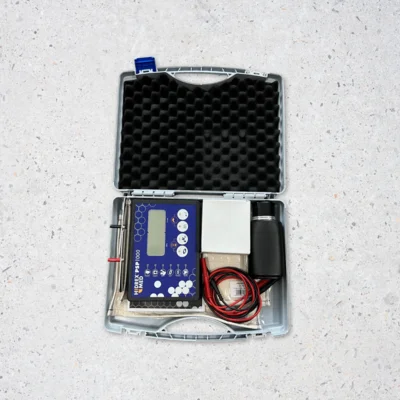
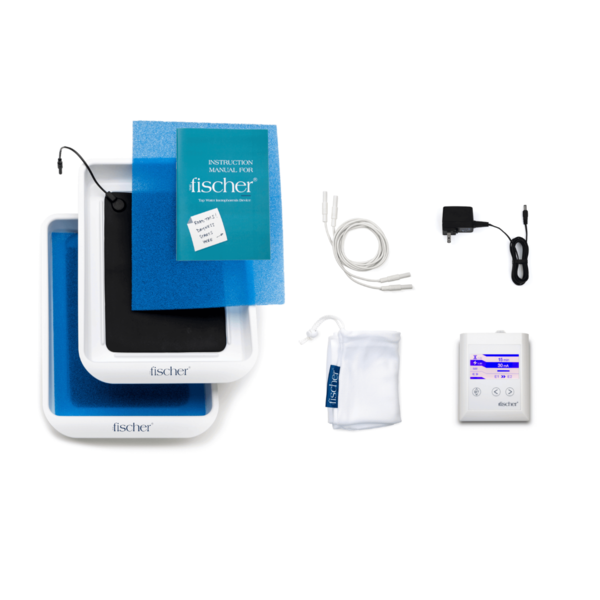
| Hidrex | The Fischer | |
|---|---|---|
| FDA cleared | Yes | Yes |
| Areas treated | Hands, feet, underarms | Hands, feet, underarms |
| Current modes | Direct and pulsed | Direct and pulsed |
| Maximum current | 35 mA (DVP1000 Ultimate) | 30 mA |
| Hands and feet together | Check current specification | Yes, in the same session |
| Electrodes | Check current specification | Metal-free silicon-graphite |
| Prescription required | Yes, in the US | Yes |
| US insurance billing | Sold direct to the patient | Billed to most major plans; prior authorization handled for you |
| Support | Manufacturer support | US-based, specialising in iontophoresis since 1948 |
| Warranty | Check current terms | 4-year limited warranty, 60-day guarantee |
Specifications from the manufacturers and from the 2024 JAAD research letter. Check current documentation before deciding.
Where Hidrex is the better choice
Hidrex is a well-established manufacturer with a long track record in Europe, and its higher maximum current may suit patients who have found 30 mA insufficient, which is uncommon but does happen. If you are outside the US, where our insurance support is no use to you, that reach matters more than anything we offer.
If you are paying out of pocket regardless and want to compare on price alone, compare the current models directly. The two sit in a similar range.
Where The Fischer is the better choice
- Insurance, if you are insured in the US. This is the real difference. Most major plans cover The Fischer as durable medical equipment for hyperhidrosis, and we handle prior authorization, documentation and claims. Many patients pay nothing out of pocket, which makes a price comparison on sticker alone misleading.
- Hands and feet in one session. Trays sized to treat all four areas at once, rather than two separate sessions every time.
- Metal-free silicon-graphite electrodes. No corrosion, no metal burns, and no replacement electrode cost over the life of the device.
- US-based support and service. Troubleshooting, repairs and warranty handled domestically, including for machines sold in the 1990s.
- A 4-year warranty and a 60-day guarantee, so there is a route back if it does not suit you.
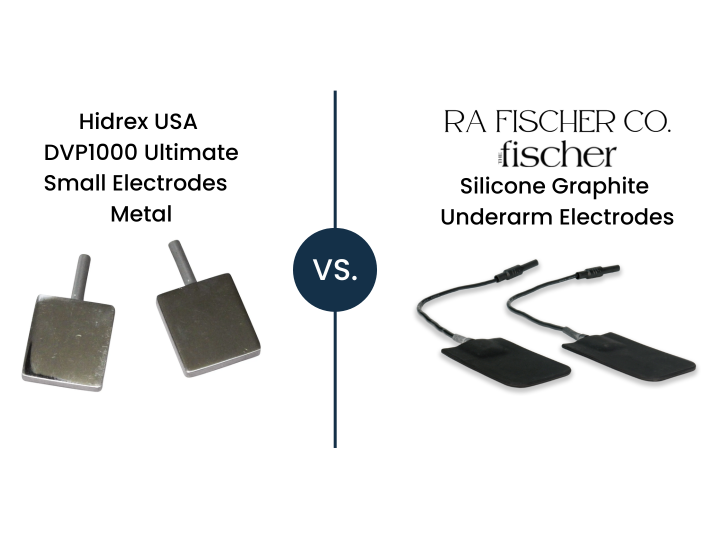
Electrode material affects comfort, corrosion, and whether electrodes ever need replacing.
What it costs, with and without insurance
Out of pocket, the two devices are comparable. The JAAD survey put The Fischer at roughly $700 to $1,000 and the Hidrex DVP1000 Ultimate at around $995, though current pricing should be checked with each supplier.
With insurance, the comparison changes completely. Plans including Tricare, Aetna, Cigna, United Healthcare, Horizon BCBS and Select Health commonly cover The Fischer when a provider documents medical necessity, and we submit the paperwork. Checking costs nothing and carries no obligation, so it is worth knowing your number before comparing prices at all.
Frequently asked questions
Is Hidrex or The Fischer more effective?
Both are FDA-cleared, both offer direct and pulsed current, and both treat hands, feet and underarms. Iontophoresis works the same way whichever device delivers it, so effectiveness depends far more on treating consistently than on which of these two you choose.
Does insurance cover Hidrex?
Hidrex is sold directly to patients. The Fischer is covered by most major US insurance plans as durable medical equipment for hyperhidrosis, and RA Fischer submits prior authorization and claims on your behalf. For an insured US patient, this is usually the largest difference in what you actually pay.
Do I need a prescription for either device?
Yes. Both are FDA-cleared medical devices and require a prescription in the US. If you do not have one, we will talk through the next steps when you check coverage.
Does a higher maximum current mean better results?
Not usually. Most patients settle at 10 to 15 mA for hands and 15 to 18 mA for feet, well below the maximum either device offers. Comfort and consistency matter more than peak current, and treating at a level you can tolerate every other day beats a higher setting you avoid.
Can I try The Fischer and return it?
Yes. The Fischer includes a 60-day money-back guarantee on eligible US orders and a 4-year limited warranty. Call (800) 525-3467 for a Return Authorization before shipping anything back.
Still deciding?
Our Treatment Specialists talk people through this comparison every day, including people who end up choosing something else. There is no obligation, and we can tell you what your insurance covers before anything is ordered. Call (800) 525-3467 or send us a message.
Read next: how The Fischer works, or compare it with miraDry, Dermadry and Drionic.