Add Your Heading Text Here
UNCOATED | PRE-LUBRICATED | HYDROPHILIC
If you’ve been living with urinary retention or neurogenic incontinence, your doctor has probably prescribed the use of an intermittent catheter to empty your bladder. Lubricating the catheter prior to insertion is the key to minimizing discomfort while self-cathing.
Patients nowadays have three primary options: uncoated, pre-lubricated, or hydrophilic catheters. What are the differences, and how do you know which is the right choice for you?

PRE-LUBRICATED CATHETERS
Pre-lubricated catheters are covered in a gel-like, sterile lubricant. They are single-use and ready to go right out of the packaging.

UNCOATED CATHETERS
Uncoated intermittent catheters are the standard and most common you’ll find. These allow you to lubricate the catheter yourself so that you can better control the amount that’s applied. A sterile lubricant like Surgilube is a common recommendation our Treatment Specialists make.
HYDROPHILIC CATHETERS
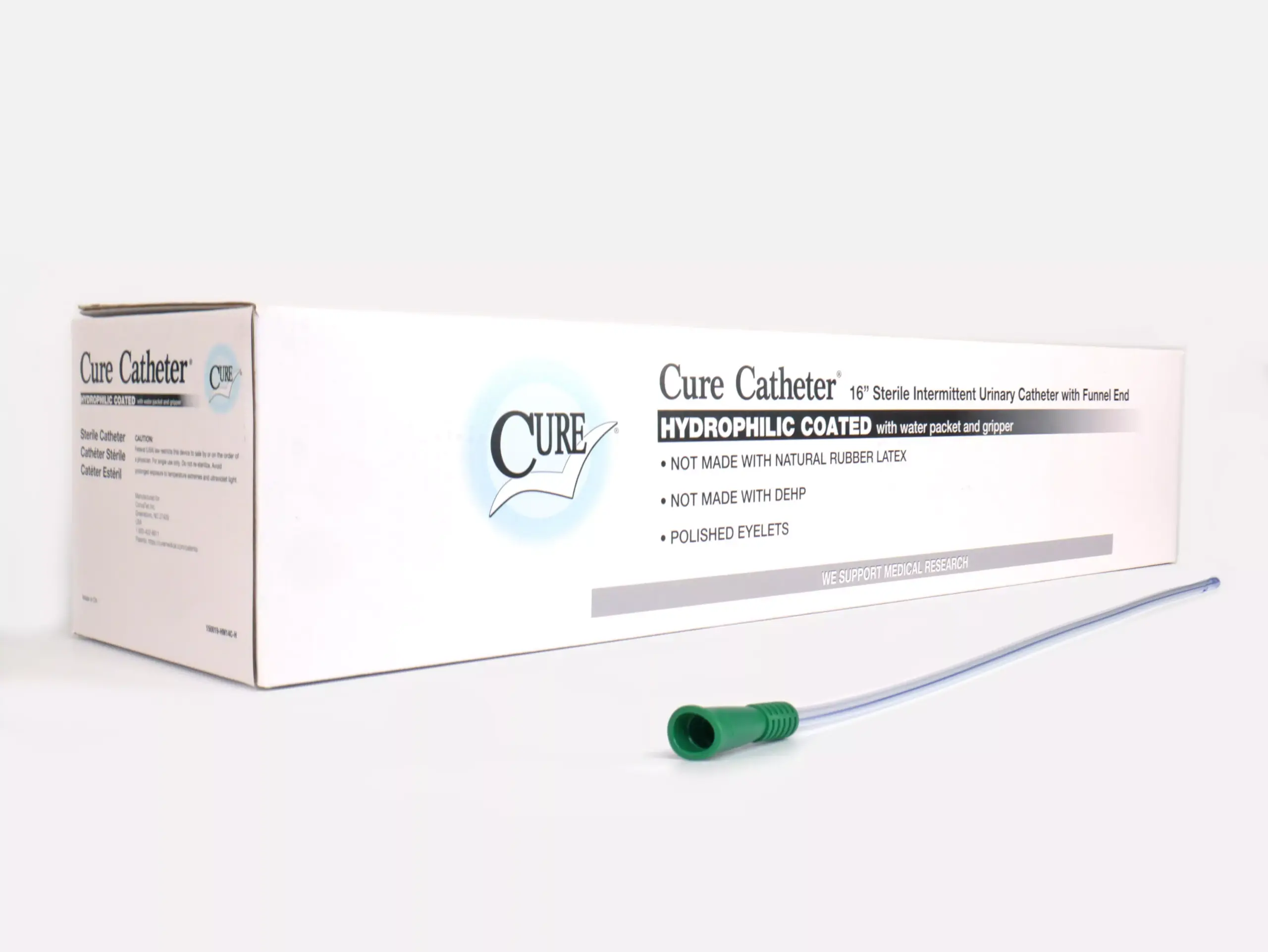
Hydrophilic catheters feature a proprietary coating that reacts to water, self-lubricating the catheter within the unopened packaging. The catheter remains lubricated throughout the self-cathing experience. There are two types of hydrophilic catheters:
PACKET BREAKING: Simply fold the packaging to break a packet of the sterile solution, coating the catheter. Just wait 30 seconds for the lubrication to be fully activated.
NO PACKET BREAKING: The solution is already inside the packaging, meaning the catheter lubrication is already activated. No need to break the packet and wait 30 seconds before the catheter is ready to use.
THE MOST IMPORTANT DIFFERENCES
With uncoated catheters, there is no sterile water or saline solution. The lubricant is purchased individually and is more of a gel, so it won’t drip. Lubrication is key because when a catheter is inserted, it can cause micro-trauma to the urethral tissues if improperly coated. This not only feels uncomfortable, but it also increases the risks of developing a UTI (urinary tract infection).
Pre-lubricated and hydrophilic catheters are both quick to open and easy to insert. The main advantage a pre-lubricated catheter is the “no-drip and less-mess” experience. Remember: you’re not always going to be self-catheterizing at home, so a self-cathing solution that’s easy to use is an important thing to consider.
If you’re self-cathing more than once a day, we recommend talking to your doctor about switching to a pre-lubricated or hydrophilic catheter.