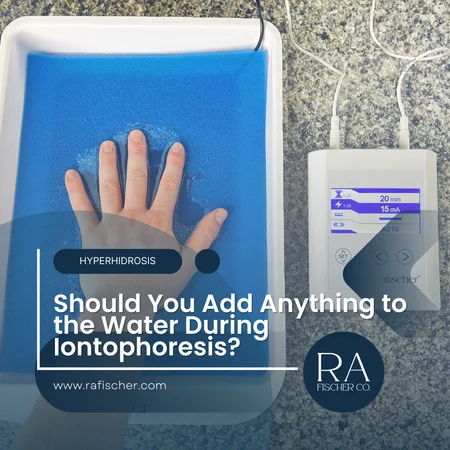
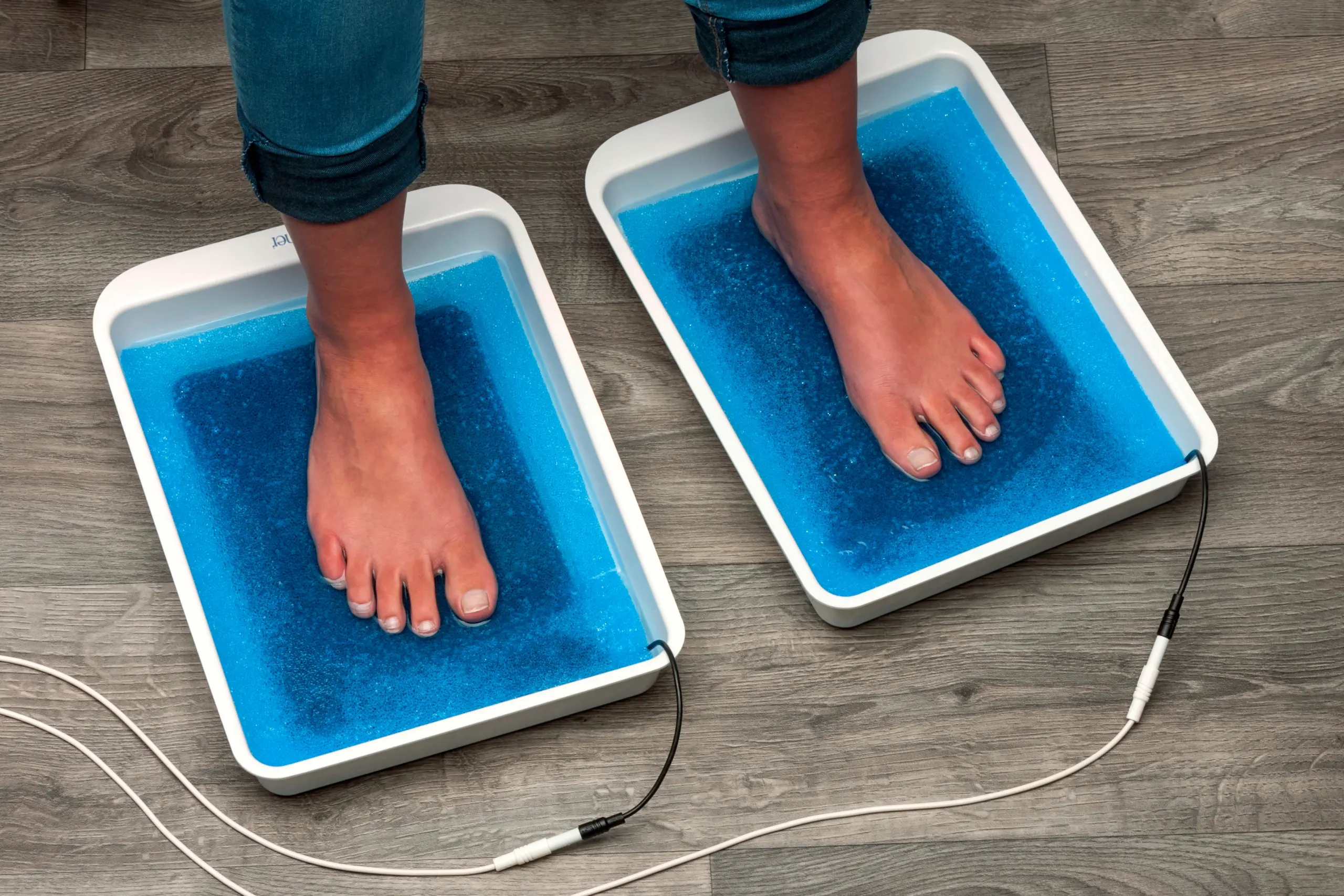
Iontophoresis, a proven treatment for hyperhidrosis,uses mild electrical currents and the minerals in tap water to reduce excessive sweating. These minerals “plug up” sweat pores, creating a dryness barrier that provides long-lasting relief. However, the mineral content in tap water varies by location.
If you’ve experienced limited success with iontophoresis, soft water may be the culprit. Furthermore, adding baking soda or prescription medications under a doctor’s guidance could improve results.
Also: Common Questions #2: How does iontophoresis treatment work?
Adding Prescription Medications: What You Should Know
The Role of Glycopyrrolate
Studies, including this one from the U.S. National Library of Medicine, have explored combining tap water iontophoresis with prescription medications like glycopyrrolate. The results show:
- Tap water alone provided dryness for a median of 3 days.
- Tap water with glycopyrrolate extended dryness to 5–11 days, depending on the method.
While glycopyrrolate may enhance iontophoresis effectiveness, it may also produce systemic effects, so consultation with a healthcare provider is essential.
Adding Baking Soda: A Simple Adjustment
Why Baking Soda Helps
Soft water, which lacks minerals like calcium and magnesium, can hinder iontophoresis effectiveness. Adding baking soda to the water can:
- Increase its conductivity.
- Regulate pH levels, ensuring proper current flow.
Dr. David M. Pariser explains in Hyperhidrosis: An Issue of Dermatologic Clinics: “If the mineral content of tap water is low, insufficient current flow may occur. This situation can be corrected by adding 5 g (1 teaspoon) of baking soda to each tray.”
Also: Direct vs. Pulsed Current Iontophoresis: Comparison Breakdown
Do You Need to Add Anything to Your Water?
When Natural Tap Water is Enough
In most cases, the minerals in tap water are sufficient for iontophoresis to deliver noticeable results within two weeks of consistent treatment. Hyperhidrosis patients typically start with:
- 20-minute sessions every other day until dryness is achieved.
- A maintenance schedule: Treatments once every 3–4 weeks to sustain results.
When Adjustments May Be Necessary
If results remain unsatisfactory after two weeks, consider these steps:
- Add baking soda to the water to increase conductivity.
- Discuss with your doctor the potential benefits of adding glycopyrrolate or other medications to your treatment.
Also: Hyperhidrosis and Sensitive Skin: New Research and How Iontophoresis Can Help
Not Sure If You Have Soft Water?
Tip: Use a water hardness map, such as this one provided by Hydro-Flow USA, to determine if your area has soft water. Adjustments like adding baking soda can help ensure your iontophoresis treatments achieve optimal results.
“Talk to our Treatment Specialists today to see why the Fischer iontophoresis device is the best treatment available for hyperhidrosis and to check insurance benefits.”
Jennifer Jacobellis – CEO
The Fischer Iontophoresis Device: Optimized for Results
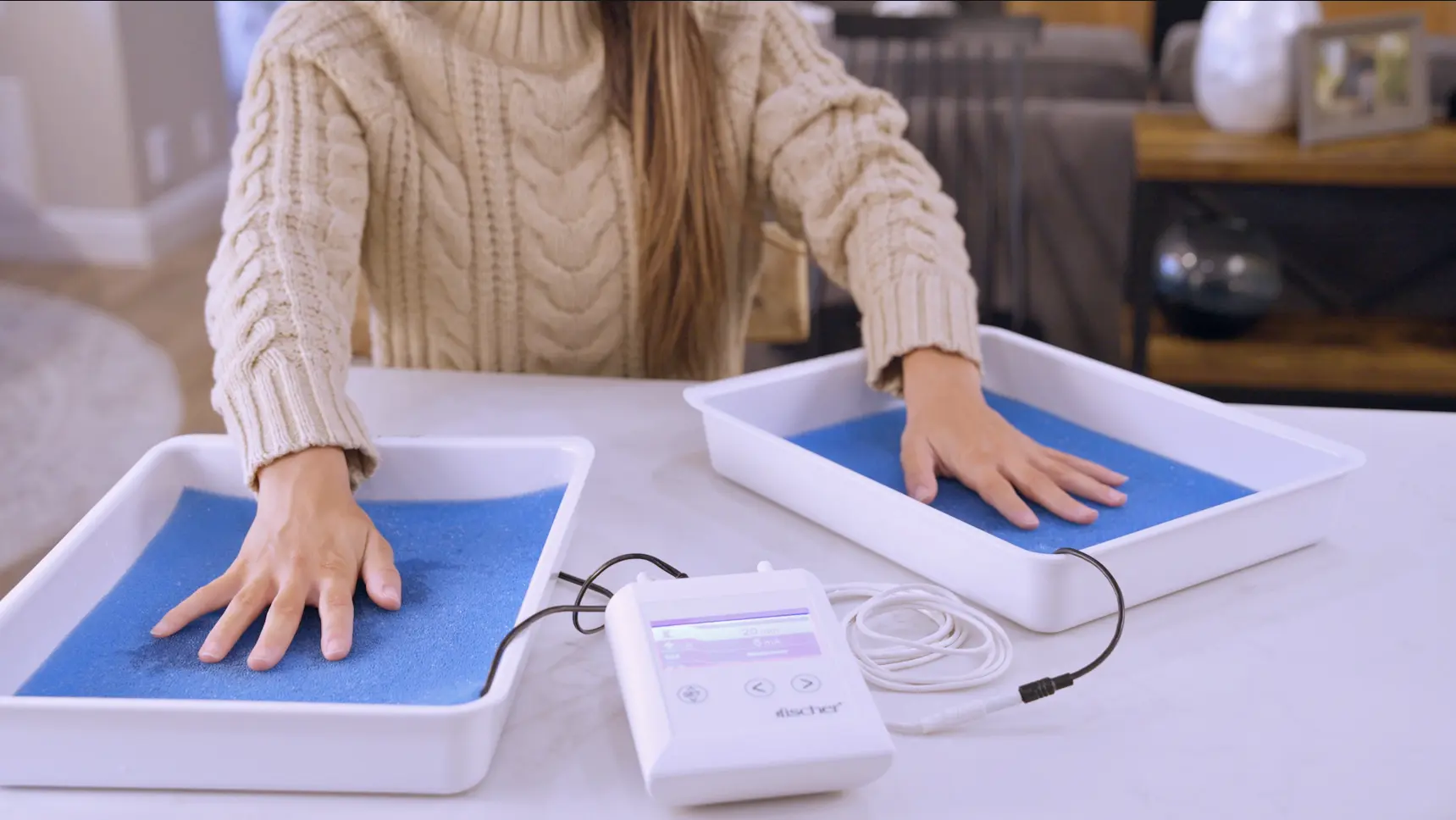
The Fischer iontophoresis device offers precise control and customizable treatments for hyperhidrosis. Moreover, its design ensures compatibility with various water types, and adjustments like adding baking soda can further enhance its effectiveness.
Contact a Treatment Specialist today to learn more about maximizing your iontophoresis results and achieving long-lasting dryness with The Fischer.
THE FISCHER
Reach out today
Contact one of our Treatment Specialists today to answer any and all of your questions about the Fischer.